Is Hydrafacial Good for Sensitive Skin?
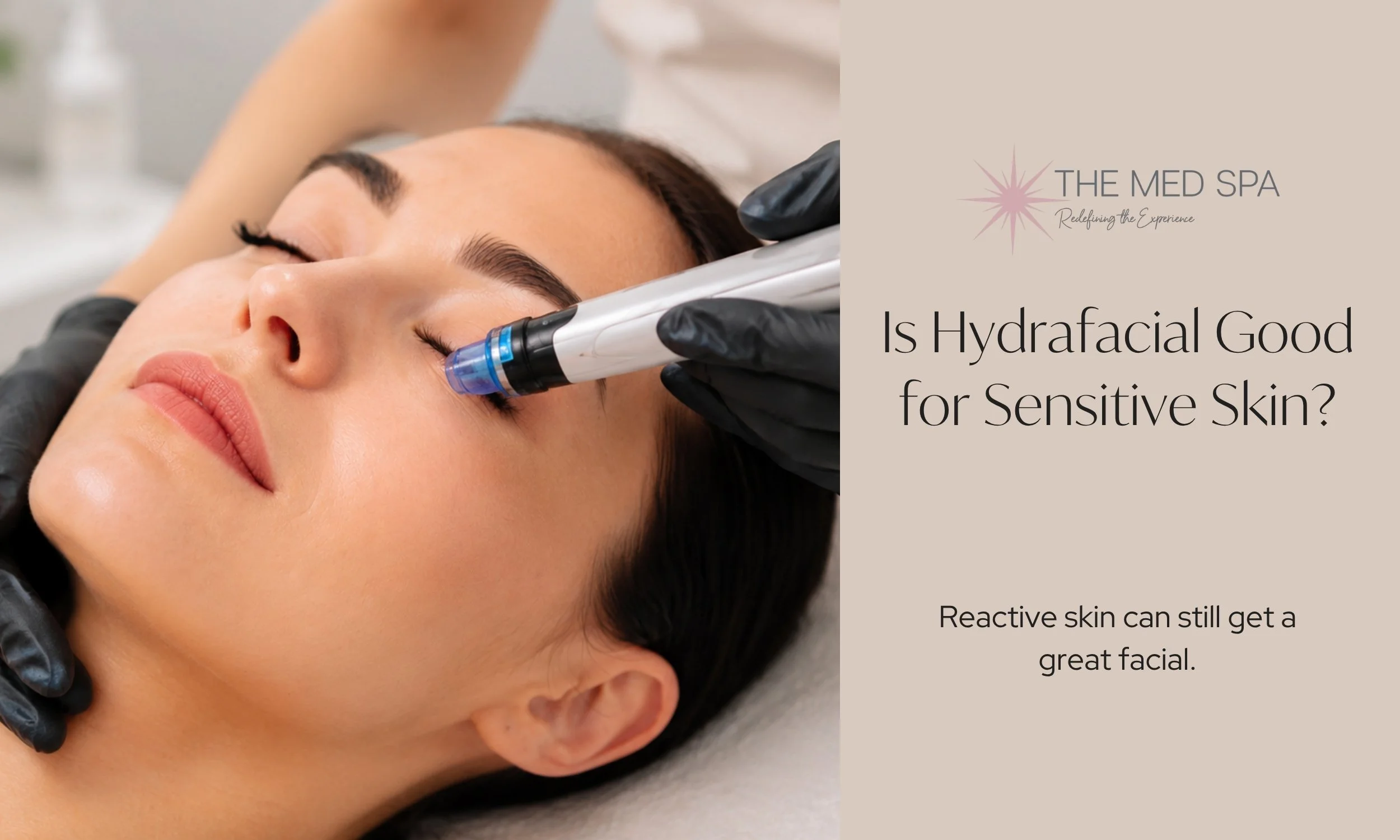
People with sensitive skin all have the right to be picky with what goes into their skin, so caution about facials makes complete sense. A treatment that cleanses, exfoliates, and clears your pores can sound like a fast track to redness and the kind of flare-up that lingers for days.
Hydrafacial can be a good option for sensitive skin because it is gentle and non-invasive, and the whole treatment can be dialed down to suit reactive skin. The key word is customized, because sensitive skin covers many different reactions, and what soothes dry, reactive skin may be wrong during an active rosacea or eczema flare.
In this guide, we’ll walk you through how Hydrafacial works, what your provider can adjust, when to postpone, and how to care for your skin afterward, starting with the basics of the treatment itself.
What Is a Hydrafacial and How Does It Work?
A Hydrafacial is a multi-step facial that cleanses, exfoliates, clears out your pores, and infuses hydrating serums in a single session, all using water and gentle suction. A water-based tip first lifts away dead surface cells, then gentle suction draws debris out of your pores before hydrating serums finish the treatment.
That suction step uses vortex technology, a water-based system that loosens and vacuums out pore debris without aggressive pressing. The goal is better hydration, smoother texture, clearer pores, and an overall fresher look.
We customize every Hydrafacial at The Med Spa around your skin's needs and the results you want. With the process clear, the central question deserves a direct answer.
Is Hydrafacial Good for Sensitive Skin?
Yes, Hydrafacial is generally suitable for many people with sensitive skin when a qualified provider adjusts it appropriately. What decides it is the provider's judgment and the state of your skin on the day. However, sensitive skin can generally mean dryness, redness, stinging, product reactions, or skin that flushes easily, so a consultation is important before you book.
Why Can Hydrafacial Be Gentler Than a Traditional Facial?
Hydrafacial can be gentler than a traditional facial because it works with water and soft suction, which are kinder to reactive skin than the friction of a manual scrub, and three of its features are sensitive skin-friendly:
1. Gentle, Water-Based Exfoliation
For reactive skin, the friction of a grainy scrub is often the trigger, and Hydrafacial's water-based exfoliation skips that abrasion, sparing skin that reddens or stings the rubbing that usually sets it off.
2. Pore Clearing Through Gentle Suction
Manual extractions, the hands-on squeezing used in many facials, can leave sensitive skin sore and blotchy. Hydrafacial's suction lifts the same debris without that pressure, so reactive skin avoids the irritation squeezing tends to cause.
3. Hydrating and Soothing Serum Infusion
After the active steps, the closing infusion delivers calming, hydrating ingredients like hyaluronic acid, antioxidants, peptides, and other soothing agents into freshly worked skin. For reactive skin, that replenishment can take the edge off and leave the surface looking plumper and calmer. It supports how your skin looks and feels, though it does not treat medical skin conditions.
A gentle treatment still needs careful tailoring before it touches reactive skin.
How Is a Hydrafacial Customized for Sensitive Skin?
A Hydrafacial is customized for sensitive skin by adjusting its intensity at every step, guided by your skin history and how reactive you are on the day. Your provider builds the session around your skin, adjusting as they go.
The adjustments usually include:
Reviewing your skin history, current products, known sensitivities, allergies, and recent treatments
Lowering suction strength around delicate spots like the cheeks and nose
Reducing or skipping the peel step when skin is especially reactive
Choosing calming, hydrating serums over stronger corrective boosters, the optional add-in serums aimed at specific concerns
Leaving off extra add-ons that could raise irritation risk
Running a patch test if you have known allergies or a history of product reactions
Tell your provider about any retinoids, prescription acne medication, recent chemical peels or laser treatments, and any active irritation before your appointment. These all change how your skin will respond. Customization handles most concerns, though some skin situations call for waiting.
When Should You Avoid or Postpone a Hydrafacial?
You should postpone a Hydrafacial when your skin is actively inflamed, broken, or fighting an infection, since treating it then can make things worse. Wait for these to settle first:
An active rosacea flare-up
A severe eczema or dermatitis flare
Sunburn
Open wounds, cuts, or peeling skin
An active cold sore or herpes outbreak
A significant skin infection
Severe inflammatory acne in the treatment area
A recent aggressive laser, peel, or resurfacing treatment, depending on your provider's guidance
Postponing is temporary and gives your skin time to stabilize so the treatment lands comfortably later, and your provider can tell you when the timing is right. For patients who are cleared to go ahead, the experience itself is usually calmer than expected.
What Does a Hydrafacial Feel Like on Sensitive Skin?
Most people with sensitive skin describe a Hydrafacial as gentle and surprisingly cooling. The suction feels like a light gliding or soft vacuum moving across your face.
A good provider checks in throughout and adjusts the moment anything feels like burning or sharp discomfort, and the treatment usually comes with little to no downtime. Knowing what is normal afterward makes those first hours much less worrying.
What Side Effects Can Sensitive Skin Patients Expect After a Hydrafacial?
Most sensitive-skin patients only see mild, short-lived effects after a Hydrafacial. The most common are light redness, mild tightness, brief flushing, and a touch of dryness if your barrier was already compromised, all of which usually fade within a few hours to a day as your skin settles.
Reach out to your provider if redness, swelling, itching, or burning feels severe or lasts longer than expected. They can look at what is happening and guide you. Gentle aftercare is what keeps those mild effects mild.

How Should You Care for Sensitive Skin After a Hydrafacial?
Care for sensitive skin after a Hydrafacial by keeping everything gentle and giving your barrier a few quiet days. Simple, fragrance-free products and daily sun protection do most of the work.
Stick to a calm routine:
Use a fragrance-free cleanser and moisturizer
Apply sunscreen every morning
Skip exfoliating acids, retinoids, and scrubs for as long as your provider advises
Avoid very hot showers, steam rooms, and intense heat right after treatment if advised
Keep makeup light, or wait until your skin feels calm
Leave the skin alone, and add any new products one at a time
Once your skin tolerates a single treatment well, you can think about a routine.
How Often Should Someone With Sensitive Skin Get a Hydrafacial?
Many people get a Hydrafacial about once a month, but sensitive skin often does better on a more individual schedule set by your skin's tolerance.
Frequency depends on your skin goals, how well you tolerate treatment, the season, and the active products you use at home. Let your first treatment show you how your skin responds before you commit to a recurring plan.
Consistency and comfort matter more than squeezing in extra sessions. Two overlapping concerns come up often with sensitive skin, so they are worth addressing directly.
Can Hydrafacial Help Sensitive Skin That Is Also Acne-Prone or Dry?
Yes, Hydrafacial can help sensitive skin that is also acne-prone or dry, as long as the settings and serums match your main concern, since the same treatment looks quite different depending on what your skin needs.
For acne-prone sensitive skin, the focus shifts toward clearing congestion gently while keeping hydration light, so pores get cleaner without provoking a reaction. Active, inflamed breakouts should be assessed first, since working over them can aggravate the skin.
For dry sensitive skin, the emphasis shifts the other way, toward richer hydration that leaves the surface feeling more comfortable and replenished.
Matching the settings to your main concern is what lets one treatment serve skin that is sensitive and acne-prone, or sensitive and dry. When you are ready to find the right version for your skin, the provider you choose makes the difference.
Choose The Med Spa for a Sensitive-Skin Hydrafacial in Woodbury
We offer customized Hydrafacial treatments in Woodbury, MN, built around your skin's sensitivities and goals. Our qualified medical providers tailor every step, including suction strength and serum choice, so your treatment fits your skin.
We focus on personalized care for sensitive and reactive skin, and we welcome patients across Woodbury, Minneapolis, and Saint Paul.
Ready to treat your skin gently? Book a Hydrafacial consultation at The Med Spa in Woodbury. We will talk through your skin's sensitivities and current concerns, then map out the gentlest approach for your goals.
Frequently Asked Questions
Can Hydrafacial make sensitive skin worse?
It can if the treatment is too aggressive or done during an active flare, which is why customization matters so much. Performed gently by a qualified provider on stable skin, it rarely causes lasting problems and often leaves skin calmer.
Is Hydrafacial safe for rosacea?
Sometimes, but only when your rosacea is calm and a knowledgeable provider adjusts the treatment. During an active rosacea flare it is better to wait, since added heat and suction can worsen redness, so check with a provider who understands rosacea first.
Should I get a Hydrafacial if I have eczema?
Not during an eczema flare, when the skin barrier is already broken and inflamed. Once your eczema is well controlled, a gentle, hydrating Hydrafacial may be an option, so ask your provider or dermatologist before booking.
Does Hydrafacial hurt?
No, most people find it painless and even relaxing. You may feel light suction gliding across your skin along with a cool, wet sensation. Tell your provider right away if anything stings or burns so they can adjust.
Can I get a Hydrafacial if I use retinol?
Often yes, though you may need to pause retinol for a few days before and after, since it can leave skin more sensitive, and your provider will give you a timeline based on your routine, so mention any prescription retinoids too.
How long will redness last after a Hydrafacial?
Usually a few hours to a day for sensitive skin. Naturally reactive skin may stay pink a little longer. Contact your provider if redness feels severe or lingers well beyond a day.
What is the best Hydrafacial booster for sensitive skin?
Calming, hydrating boosters with ingredients like hyaluronic acid tend to suit sensitive skin best. Stronger corrective boosters with active acids are usually better saved for when your skin is stable. Your provider can match the booster to your skin on the day.